
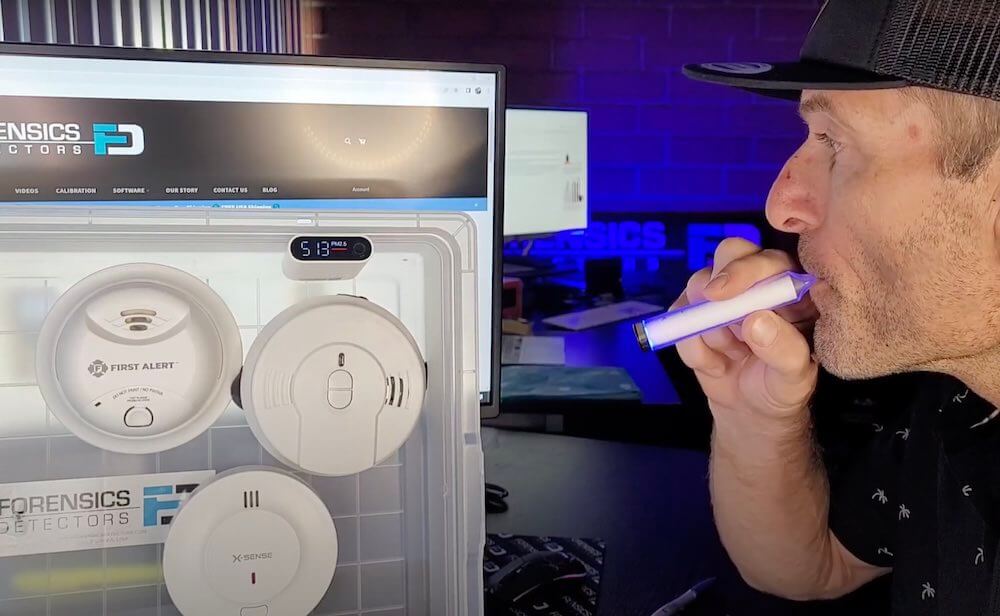
In recent years, vaping has gained vast popularity, especially among the jr. generation. It has become a trendy way to waste nicotine, surpassing orthodox methods like cigarettes and cigars. The rise of does vape set off smoke detectors has also sparked debates and discussions regarding its potential risks and benefits. In this article, we will take a closer look at vaping and delve into its history, components, and flow controversies.
Vaping, also known as physics or e-cigarette smoke, is the process of inhaling and exhaling vapour produced by an electronic . This device, also known as a vape pen, is supercharged by a battery and contains a warming that vaporizes a liquid state root. This vapour is then inhaled by the user through the mouth, simulating the act of smoke. The liquid state solution, ordinarily referred to as e-juice or e-liquid, usually contains nicotine, flavorings, and other chemicals.
The inception of vaping can be copied back to the 1960s, when Herbert A. Gilbert patented a smoke-free non-tobacco butt that used a flavored liquidity instead of a burning tobacco. However, it was not until 2003 that the Bodoni font e-cigarette, as we know it nowadays, was unreal by Hon Lik, a Chinese chemist. Since then, the vape manufacture has grown chop-chop, with a variety of products and flavors available in the commercialize.
Unlike orthodox smoke methods that demand electrocution tobacco plant, vaping does not create smoke. Instead, it creates vapour that dissipates quickly, leaving behind a nice odor. This has led many to believe that vaping is a safer choice to smoking. However, there is still on-going explore regarding the potentiality long-term effects of vaping on health. Some studies have recommended that the chemicals used in e-juice, such as diacetyl and formaldehyde, may have toxic personal effects on the lungs.
Another concern surrounding vaping is the potency risk of dependence, as most e-juice solutions contain nicotine. Although nicotine in itself is not considered a carcinogen, it is highly habit-forming and can have untoward effects on the head and tense system of rules. Therefore, it is necessary for vapers to be aware of the nicotine content in their e-juice and regularise their employment accordingly.
Despite the controversies, vaping has become a taste phenomenon. It has its own community and subculture, with many vape enthusiasts competitive in overcast-chasing and building their own customised vape rigs. Social media also plays a significant role in the promotional material and merchandising of vaping, with influencers and celebrities often seen using vape pens in their posts.
The popularity of vaping has also resulted in the increase of the industry, with hundreds of companies producing and merchandising vape devices and e-liquid. This has led to a vast range of flavors, ranging from tasty and sweetness to bold and piquant. Some even mime the smack of nonclassical drinks and desserts, making vaping a fun and flavourful experience.
In termination, vaping is a subversive way to enjoy nicotine, with its typical flavors and smokeless nature. However, it is necessary to understand the potential risks associated with it and regularise its employment. As the debate over its refuge and rule continues, it is material for both vapers and non-vapers to stay knowing and semiliterate about this maturation sheer in Bodoni bon ton.