
In industrial environments, precise level measurement is critical for ensuring operational efficiency and safety. Ultrasonic level meters have emerged as a reliable solution for measuring liquid levels without direct contact. This article explores the principles, applications, and best practices for using ultrasonic level meters, with a focus on both general-purpose and explosion-proof models.
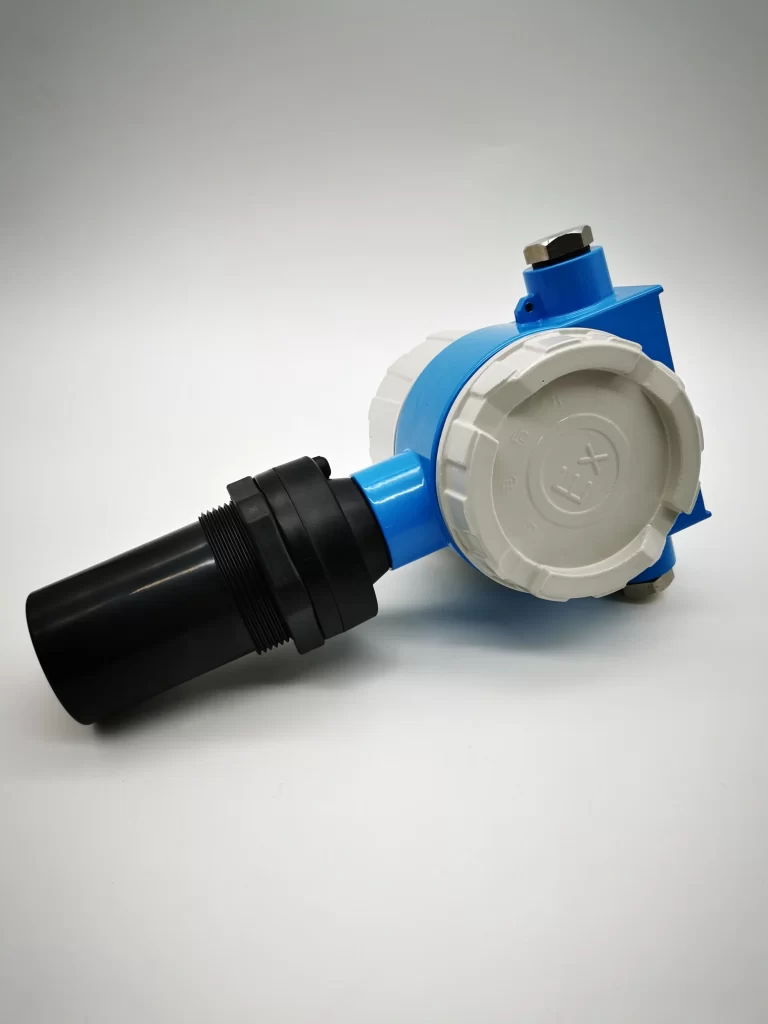
How Ultrasonic Level Meters Work
Ultrasonic level meters operate by emitting high-frequency sound waves that reflect off the surface of a liquid and return to the explosion proof ultrasonic level sensor. The time it takes for the sound wave to travel from emission to reception is used to calculate the distance to the liquid surface, which is then converted into a level measurement. This non-contact method avoids contamination and wear, making it ideal for harsh environments.
The basic formula used is:
Distance=
2
Speed of Sound×Time
This calculation assumes the speed of sound is constant, but environmental factors like temperature and humidity can slightly affect accuracy. Modern ultrasonic level meters often include temperature compensation to minimize these effects.
Key Components of an Ultrasonic Level Meter
Transducer
The transducer is the core component responsible for emitting and receiving ultrasonic waves. It is typically made of durable materials like ABS or PVDF to withstand corrosive environments. For explosion-proof applications, the transducer must meet specific safety standards, such as Ex d IIC T6 Gb.
Control Unit
The control unit processes the signals from the transducer, applies algorithms for noise filtering, and converts the data into usable outputs like 4–20mA signals or digital communications (e.g., RS-485). Advanced models use intelligent software to analyze echoes dynamically, improving accuracy and reducing false readings.
Display and Interface
Most ultrasonic level meters feature an LCD display for local reading and buttons for manual calibration. They can also integrate with remote monitoring systems, providing real-time data to DCS (Distributed Control Systems) or PLCs (Programmable Logic Controllers).
Applications of Ultrasonic Level Meters
General-Purpose Use
A general-purpose ultrasonic level meter for liquids is suitable for non-hazardous environments such as water treatment plants, food processing, and agricultural storage. These devices are cost-effective and easy to install, making them a popular choice for everyday applications.
Explosion-Proof Environments
In industries like oil refining, chemical processing, and pharmaceuticals, explosive atmospheres require specialized equipment. An explosion-proof ultrasonic level sensor provides reliable measurements while adhering to stringent safety standards. These sensors are designed with rugged, waterproof housings and certified for use in hazardous zones.
Best Practices for Accurate Readings
Installation Tips
- Positioning: Mount the sensor vertically above the liquid surface, avoiding obstructions like pipes or agitation equipment.
- Distance: Ensure the sensor is within the specified measurement range of the liquid.
- Environmental Factors: Protect the sensor from extreme temperatures, humidity, and corrosive vapors.
Maintenance and Calibration
- Regular Cleaning: Keep the transducer surface free from dirt, ice, or deposits that could interfere with sound waves.
- Calibration: Perform periodic calibration using known reference points to maintain accuracy.
- Firmware Updates: Ensure the control unit's software is up-to-date for optimal performance.
Troubleshooting Common Issues
When readings appear inconsistent or inaccurate, follow these steps:
- Check Power Supply: Verify that the voltage is stable and within the specified range.
- Inspect Connections: Ensure all cables and connectors are secure and undamaged.
- Validate Settings: Confirm that parameters like range, units, and temperature compensation are correctly configured.
- Assess Environmental Conditions: Identify any interference sources like steam, foam, or turbulence.
Technical Specifications Comparison
| Feature | General-Purpose | Explosion-Proof |
|---|---|---|
| Measurement Range | Up to 20 meters | Up to 20 meters |
| Housing Material | Plastic or aluminum | Die-cast aluminum, IP65-rated |
| Explosion Rating | Not required | Ex d IIC T6 Gb |
| Output Options | 4–20mA, relay | 4–20mA, RS-485, relay |
| Temperature Range | -20°C to 60°C | -20°C to 80°C |
| Installation | Simple thread or flange | Rugged flange, suitable for hazardous areas |