
Online OCR has transformed the way individuals and businesses convert printed or handwritten documents into editable digital text. Today, organizations rely on Online OCR to process everything from scanned contracts to photographed notes.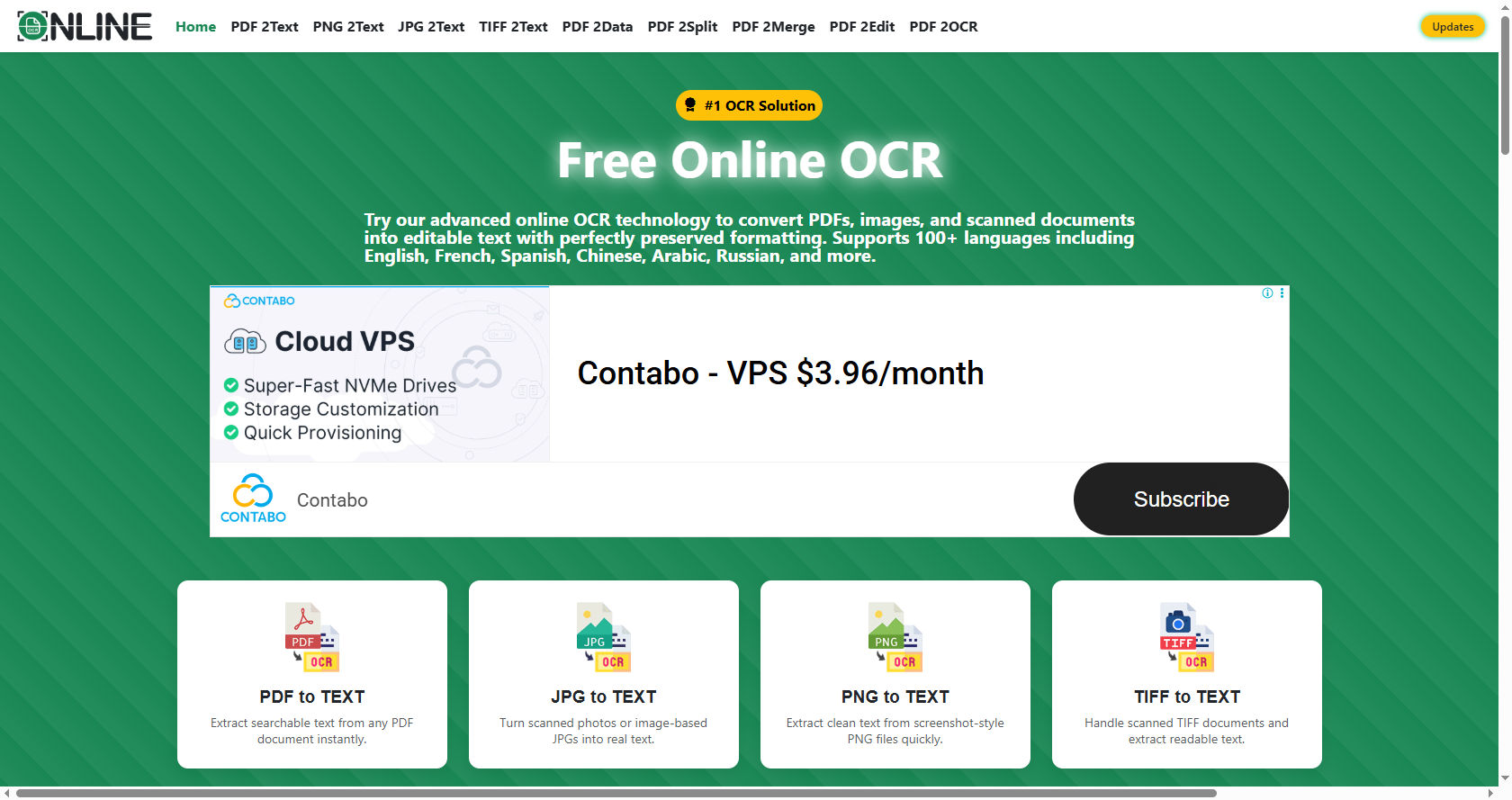
This guide explains how Online OCR works, especially when used as a batch processor that handles multiple files at once.
In simple terms, this technology allows computers to read text from images and turn it into searchable and editable content. Instead of typing pages manually, users can upload dozens or even hundreds of files and let the system do the work automatically.
This comprehensive guide will walk you through every step of the process. You will learn how documents move through the system, how recognition happens, and why batch processing is so powerful for modern workflows.
Understanding the Basics of OCR Technology
An Online OCR system is built on Optical Character Recognition technology. OCR is the method by which software identifies letters, numbers, and symbols in images. Unlike traditional desktop tools, Online OCR operates through a web browser, meaning users do not need to install heavy software.
At its core, Online OCR converts static images into machine-readable text. The software examines patterns of light and dark pixels. These patterns form shapes that represent characters. The system then compares these shapes to stored templates or learned models.
The result is editable text that can be copied, searched, or stored in digital databases. This process saves time and reduces human error.
How Batch Processing Enhances Efficiency
When Online OCR is combined with batch processing, productivity increases dramatically. Instead of uploading one file at a time, users can submit large groups of documents together.
Batch mode allows Online OCR to process files in sequence or parallel, depending on system design. This makes it possible to convert hundreds of pages in minutes.
This makes Online OCR especially useful for businesses that manage invoices, application forms, academic records, or archived paper documents. It eliminates repetitive manual tasks and speeds up digital transformation.
Core Components of an OCR Batch Processor
Every Online OCR batch processor includes several key components. Each part plays a role in ensuring accurate text recognition.
First, there is the upload interface. This allows users to drag and drop files or select them from their device.
Second, there is the image preprocessing engine. This step prepares images for accurate reading.
Third, the recognition engine analyzes character shapes.
Fourth, post-processing tools refine the output.
Finally, the export system delivers the finished text in formats like Word, PDF, or TXT.
Together, these components ensure Online OCR can handle large workloads efficiently while maintaining accuracy. The quality of Online OCR output depends on how well these parts work together.
Step 1: Image Acquisition
Before Online OCR can begin reading text, it must receive an image. These images usually come from scanners, smartphones, or digital cameras.
Modern Online OCR platforms support many file formats, including JPG, PNG, TIFF, and PDF. When users upload multiple files, the system stores them temporarily on secure servers.
To improve Online OCR accuracy, users should upload high-quality images. Clear text, good lighting, and proper alignment help the system recognize characters more easily.
In batch mode, the platform organizes uploaded files into a queue. This queue determines the order of processing.
Step 2: Image Preprocessing
Once files are uploaded, Online OCR begins preprocessing. This stage improves image quality before recognition.
Preprocessing is critical because Online OCR relies on clear character shapes. If an image is blurry or tilted, recognition becomes harder.
Common preprocessing steps include:
-
Noise reduction to remove random dots or marks
-
Deskewing to straighten tilted pages
-
Contrast adjustment to improve visibility
-
Binarization to convert images into black and white
Many Online OCR tools also detect text regions automatically. They separate images into sections, ignoring graphics and focusing only on text areas.
This stage significantly increases accuracy rates.
Step 3: Text Recognition
After preprocessing, Online OCR moves to the most important stage: character recognition.
During this stage, Online OCR compares detected shapes to stored character models. These models may be template-based or powered by machine learning.
Advanced Online OCR engines use artificial intelligence to recognize different fonts and handwriting styles. Instead of matching shapes exactly, the system predicts which character is most likely based on patterns.
For example, if a shape looks similar to both “O” and “0,” the system examines surrounding characters to decide which one makes sense.
Batch processing means this recognition happens repeatedly for every page in the uploaded group. The engine processes each file automatically without user intervention.
Step 4: Post-Processing and Error Correction
When Online OCR identifies characters, the job is not finished. Raw recognition results may include small errors.
Post-processing ensures Online OCR delivers cleaner and more accurate output. This step often includes spell-checking and dictionary comparison.
If a recognized word does not match known vocabulary, the system may automatically correct it. Context analysis also helps fix grammar mistakes.
For example, if a sentence reads “The cat sat on teh mat,” the software can detect that “teh” should be “the.”
Batch processors apply these corrections across all documents in the queue, maintaining consistency throughout large projects.
Step 5: Output and File Export
The final stage of Online OCR batch processing is exporting results. After recognition and correction, the system converts extracted text into user-selected formats.
Most Online OCR services allow output as:
-
Microsoft Word documents
-
Searchable PDFs
-
Plain text files
-
Excel spreadsheets
Because Online OCR is cloud-based, users can download results instantly or store them in cloud storage systems.
Batch export means multiple files are delivered together, often compressed into a single downloadable folder.
The Role of Artificial Intelligence
Modern Online OCR systems rely heavily on artificial intelligence. AI improves both speed and recognition accuracy.
AI allows Online OCR to learn from previous documents. Over time, the system becomes better at identifying unusual fonts and handwriting.
With machine learning, Online OCR continuously updates its models. This means recognition improves as more documents are processed.
Neural networks analyze thousands of character examples. They detect patterns that traditional rule-based systems cannot recognize.
As a result, newer systems can handle complex layouts, multiple languages, and even partially damaged documents.
Cloud Infrastructure and Scalability
A major strength of Online OCR is cloud computing. Instead of running on a single computer, the software operates on powerful remote servers.
Cloud servers allow Online OCR to process many documents at once. If demand increases, additional computing power can be allocated automatically.
Security is also central to Online OCR platforms. Data encryption protects uploaded files. Many services automatically delete documents after processing to maintain privacy.
Cloud infrastructure ensures high availability. Users can access the system from anywhere with an internet connection.
Factors That Influence Accuracy
Several factors influence Online OCR accuracy.
High-resolution scans help Online OCR detect character details more clearly. Low-quality images increase error rates.
Proper lighting and alignment make Online OCR more reliable. Crooked or shadowed text can confuse the recognition engine.
Language selection also improves Online OCR results. Choosing the correct language ensures the system uses the right dictionary and character set.
Font style, handwriting clarity, and background noise also affect performance.
Users can improve outcomes by checking image quality before uploading files.
Common Use Cases Across Industries
Businesses across industries rely on Online OCR.
In education, Online OCR helps convert printed textbooks into digital study materials. Teachers use it to digitize worksheets and exam papers.
Healthcare providers use Online OCR to scan patient forms and medical records. This reduces paperwork and speeds up data entry.
Legal firms depend on Online OCR to digitize contracts and case files. Searchable text makes it easier to find important information quickly.
Government agencies, banks, and libraries also benefit from automated document conversion.
Batch processing is especially useful when dealing with archives or large daily workloads.
Benefits of Batch Processing
There are many advantages to using Online OCR batch processing.
Speed is one of the biggest benefits of Online OCR. Large volumes of documents can be converted in minutes rather than hours.
Cost efficiency is another reason companies choose Online OCR. Automation reduces the need for manual typing and data entry staff.
Scalability makes Online OCR suitable for both small projects and enterprise-level operations.
Consistency is another advantage. Automated systems apply the same recognition rules to every document.
Time savings allow employees to focus on more important tasks instead of repetitive typing.
Challenges and Limitations
Despite its advantages, OCR technology is not perfect.
Handwritten documents can be difficult to interpret, especially if writing is unclear. Decorative fonts and complex layouts may also reduce accuracy.
Poor image quality remains a major challenge. If characters are faded or blurred, recognition becomes harder.
Language diversity can also present difficulties. Some systems support limited character sets.
However, continuous improvements in artificial intelligence are reducing these limitations.
Security and Privacy Considerations
When uploading documents to cloud-based platforms, security is important.
Reliable providers use encryption during file transfer. This prevents unauthorized access.
Many platforms also follow international data protection regulations. Files are often deleted automatically after processing.
Businesses handling sensitive information should always review privacy policies before choosing a service.
Using secure passwords and protected networks further enhances data safety.
Future Trends in OCR Batch Processing
The future of OCR technology looks promising.
Artificial intelligence will continue improving handwriting recognition. Real-time translation features may become more common.
Integration with automation tools and business software will expand. This will allow extracted data to move directly into accounting or management systems.
Mobile-friendly platforms will grow as smartphone scanning becomes more popular.
Voice integration and smart document classification may also shape the next generation of tools.
As technology advances, accuracy rates are expected to increase while processing times decrease.
Tips for Getting the Best Results
To maximize performance, follow these simple tips:
Scan documents at high resolution, ideally 300 DPI or higher.
Ensure pages are straight and well-lit before uploading.
Select the correct language settings.
Remove unnecessary marks or stains from documents.
Review final output for minor corrections.
These small steps can significantly improve recognition quality.
Conclusion
OCR batch processing has become an essential tool in the digital age. It converts physical documents into searchable and editable text quickly and efficiently.
By combining image preprocessing, intelligent character recognition, and automated correction, the system transforms large volumes of paperwork into organized digital files.
Batch functionality increases productivity by handling multiple documents at once. Cloud infrastructure ensures accessibility, scalability, and speed.
Although challenges remain, advances in artificial intelligence continue to improve accuracy and expand language support.
For students, professionals, and organizations, this technology simplifies workflows and reduces manual effort. It supports digital transformation and enhances information management.
Understanding how the system works helps users make better decisions when selecting and using document conversion tools. As automation grows, OCR solutions will remain a key part of modern data processing strategies.