
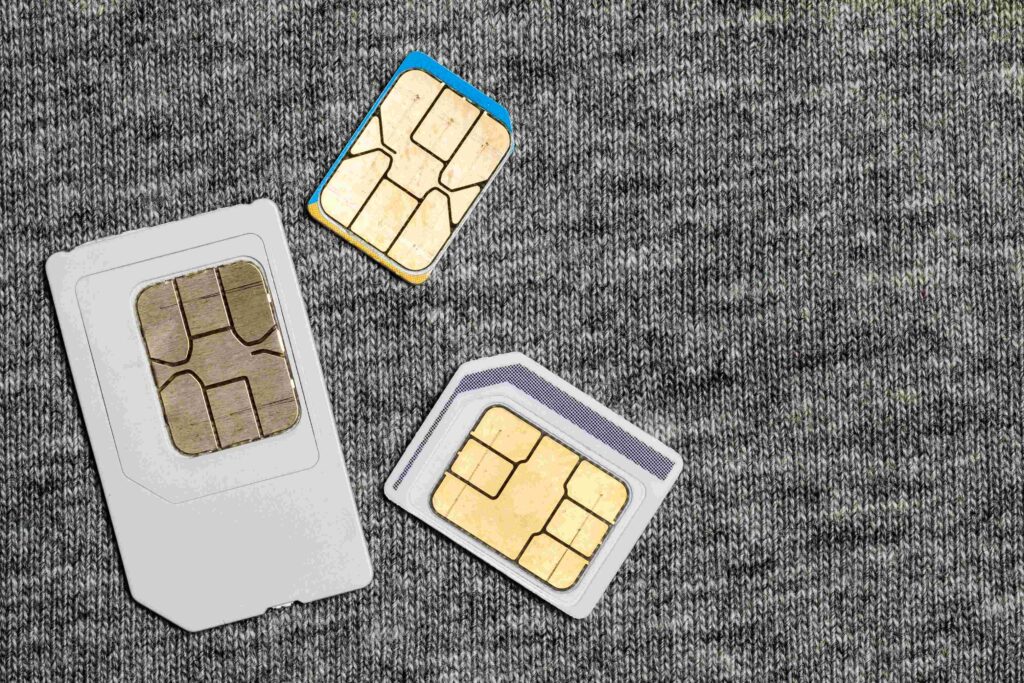
In the era of instant messaging, social media, and 5G networks, the mobile phone has become one of the most powerful and indispensable tools in modern life. While most people are familiar with their smartphones, the small chip that helps connect those devices to the world often goes unnoticed. This humble, yet crucial, component is the SIM card (Subscriber Identity Module). Despite its small size, the SIM card is a key element in mobile technology, enabling communication, security, and global connectivity.
What is a SIM Card?
A SIM card is a small chip that fits into your mobile phone and connects it to your mobile carrier's network. It serves as a unique identifier, allowing the network to recognize the user and provide access to its services, including voice calls, text messaging, and mobile data. Without the SIM card, your phone wouldn't be able to access cellular networks or function as a communication device.
At its core, the SIM card contains essential information that makes it possible for your device to connect to a mobile network. This includes:
- Your phone number: Assigned by your carrier.
- Authentication keys: Used for secure communication with the network.
- IMSI (International Mobile Subscriber Identity): A unique identifier that tells the network who you are and which carrier you belong to.
- Service provider settings: Details that help configure the device to use the correct network and services.
The Origins of the SIM Card
The first SIM card was introduced in the early 1990s alongside the GSM (Global System for Mobile Communications) network, a revolutionary standard for mobile communication. Before SIM cards, mobile phones were locked to specific carriers, and switching phones or providers was a difficult, if not impossible, task. The SIM card made it possible to remove a small piece of hardware and swap it into another device, thus offering portability and flexibility for mobile phone users.
The concept of the SIM card was designed to address the need for a universal and portable means of connecting to mobile networks, regardless of the device. This small chip provided an identity to the user, and as mobile phones evolved, the role of the SIM card only grew more significant.
The Different Types of SIM Cards
As mobile technology advanced, so did the design of SIM cards. Over time, the size and features of SIM cards were optimized to meet the demands of newer, smaller devices. The most common types of SIM cards include:
-
Standard SIM: The original, larger form of the SIM card (25mm x 15mm), used in early mobile phones. While it is largely obsolete today, it is still found in older devices.
-
Micro SIM: Smaller than the standard SIM, measuring 15mm x 12mm, this version was introduced to accommodate the thinner designs of modern smartphones. It’s still used in some devices, but newer models have largely moved on.
-
Nano SIM: The smallest version of the SIM card, measuring just 12.3mm x 8.8mm. Most current smartphones, including the iPhone, Android devices, and others, now use nano SIMs due to their small size.
-
eSIM: The embedded SIM (eSIM) is a newer innovation in the world of SIM cards. Unlike traditional SIM cards that can be physically swapped out, eSIMs are integrated directly into a device’s hardware. This digital SIM allows users to switch carriers and activate service plans remotely through software, eliminating the need to physically handle SIM cards.
How SIM Cards Work: A Simple Process
Despite their complexity, the process by which SIM cards work is relatively straightforward. Here's how they facilitate mobile communication:
-
Authentication: When you power on your device, the 數據漫遊 communicates with the mobile carrier's network. It sends the IMSI (International Mobile Subscriber Identity) to authenticate your device on the network. The network verifies that your SIM is authorized to access the services, such as voice calls, data, and text messaging.
-
Voice and Data Transmission: Once authenticated, the SIM card allows your phone to send and receive calls and data. Your device uses the SIM card to connect to the nearest base station or cell tower, which then forwards your communication to the carrier’s network.
-
Encryption: The SIM card also plays a role in securing your communication. It stores encryption keys that are used to protect the data sent over the mobile network. This ensures that calls, messages, and other forms of communication are secure and private.
-
Roaming and Global Connectivity: SIM cards also facilitate roaming – the ability to use your phone when traveling abroad. Many SIM cards are designed to automatically detect when you’ve moved to a different region or country, and they will connect to a local carrier’s network for better coverage and lower roaming costs.
SIM Cards and Global Mobility
One of the most appealing features of SIM cards is their portability. You can easily remove the SIM card from one device and place it into another, without losing your phone number or personal information. This flexibility allows you to upgrade to a new phone or switch to a backup device without any hassle. Additionally, traveling internationally becomes easier with the ability to swap SIM cards to use local mobile networks, avoiding high roaming fees.
For travelers, purchasing a local SIM card in a foreign country is a common strategy to save on roaming charges. This gives you access to local data, voice, and text services at lower rates, which is often far cheaper than paying for international roaming plans.
The Role of eSIM in Modern Devices
In recent years, eSIM technology has begun to replace traditional, physical SIM cards in newer smartphones, tablets, and wearables. Instead of a physical chip, an eSIM is embedded into the device’s motherboard. This innovation allows users to switch between carriers, update their service plans, or activate new numbers without needing to physically remove or insert a SIM card.
Benefits of eSIMs include:
- Remote Activation: Users can switch mobile providers without the need for a physical SIM card.
- Multiple Profiles: You can store multiple carrier profiles on a single eSIM, which is useful for frequent travelers or individuals who need separate work and personal numbers.
- Space Efficiency: With no need for a removable SIM card slot, devices can be made slimmer and more efficient, which is particularly important in the design of compact devices like smartwatches.
As eSIM technology gains traction, it is expected to become the dominant form of connectivity, especially in future-proof devices like 5G smartphones and Internet of Things (IoT) devices.
SIM Cards and Security
Beyond enabling connectivity, SIM cards also play an important role in maintaining the security of your mobile communications. The encryption keys stored on a SIM card help secure your phone’s communications by scrambling the data being sent and ensuring that it cannot be intercepted by unauthorized third parties.
Additionally, the PIN (Personal Identification Number) feature of SIM cards provides an extra layer of security. If your phone is lost or stolen, the PIN can prevent someone from using the SIM card in another device.
The Future of SIM Cards
The SIM card, though small, has had a profound impact on the way we connect and communicate. As technology advances, we are seeing a shift from physical SIM cards to digital alternatives like eSIMs, offering more flexibility, security, and functionality.
With the ongoing expansion of 5G networks, the role of SIM cards will continue to evolve, particularly as mobile connectivity becomes more integrated into everyday life. From supporting IoT devices to enabling seamless transitions between carriers, SIM cards—whether physical or embedded—will remain central to how we access mobile services.
Conclusion
While often overlooked, the SIM card remains a fundamental part of the mobile experience, providing users with the ability to stay connected, secure, and mobile in an increasingly interconnected world. As technology progresses and digital SIM solutions like eSIM take the spotlight, the SIM card will continue to shape the future of communication, ensuring that we can enjoy faster speeds, greater flexibility, and more seamless connectivity than ever before.